
Angle-Stable Optical Filters: A Stable Passband Across All Incidence Angles
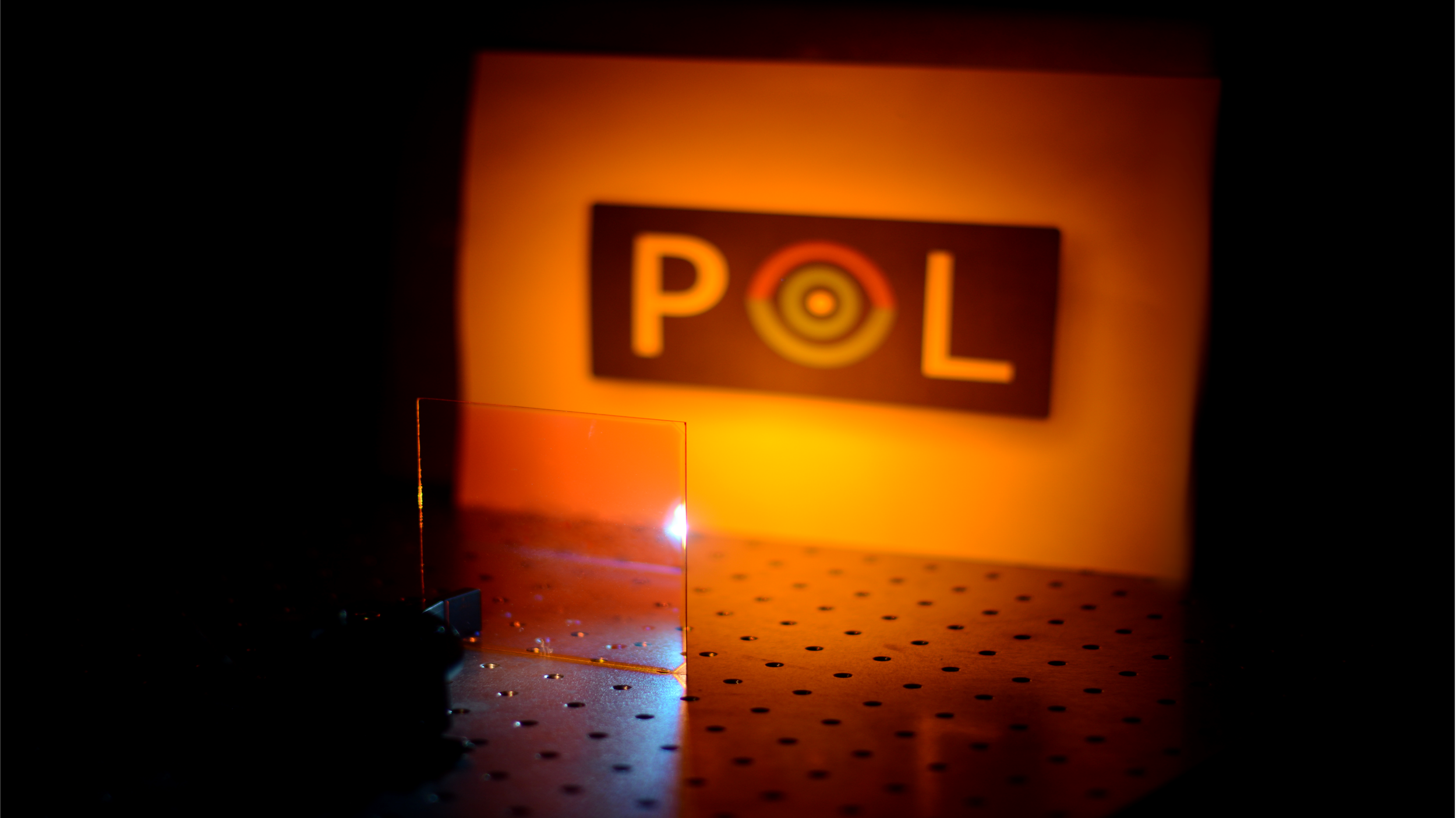
Conventional thin-film interference filters blue-shift as the angle of incidence increases, limiting the field of view and signal quality. Our polariton-based filters hold their spectral position across wide incidence angles, enabling sharper imaging and higher sensitivity.
Our Angle-Stable Filter Technology
-

Filter Performance & Key Specifications
Our filters are engineered to solve the central limitation of conventional interference coatings, angular dependence. Our designs deliver:
Angle-Stable Performance – consistent filter properties regardless of incidence angle
Custom Engineering – tailored designs to meet specific optical system requirements
Sharper Imaging & Better Signal Quality – enhanced image clarity and accuracy through optimized optical performance
High Optical Density & Transmission – precise blocking and transmission for maximum image quality
Durability & Reliability – robust materials for long-term stability
Thin Form Factor – easily integrated into OEM assemblies
Material Science Innovation – leveraging breakthroughs in organic and inorganic coatings
-

Development Milestones & Validation
PoLightFilters develops custom angle-stable optical filters based on strong light–matter coupling (polariton filters), from the University of Cologne's Humboldt Centre for Nano- and Biophotonics.
Proven manufacturability through advanced fabrication techniques
EXIST-Forschungstransfer grant awarded for technology commercialization
Accepted into RWTH Aachen’s Deep Tech Incubation Program & HighTechNRW Accelerator
-
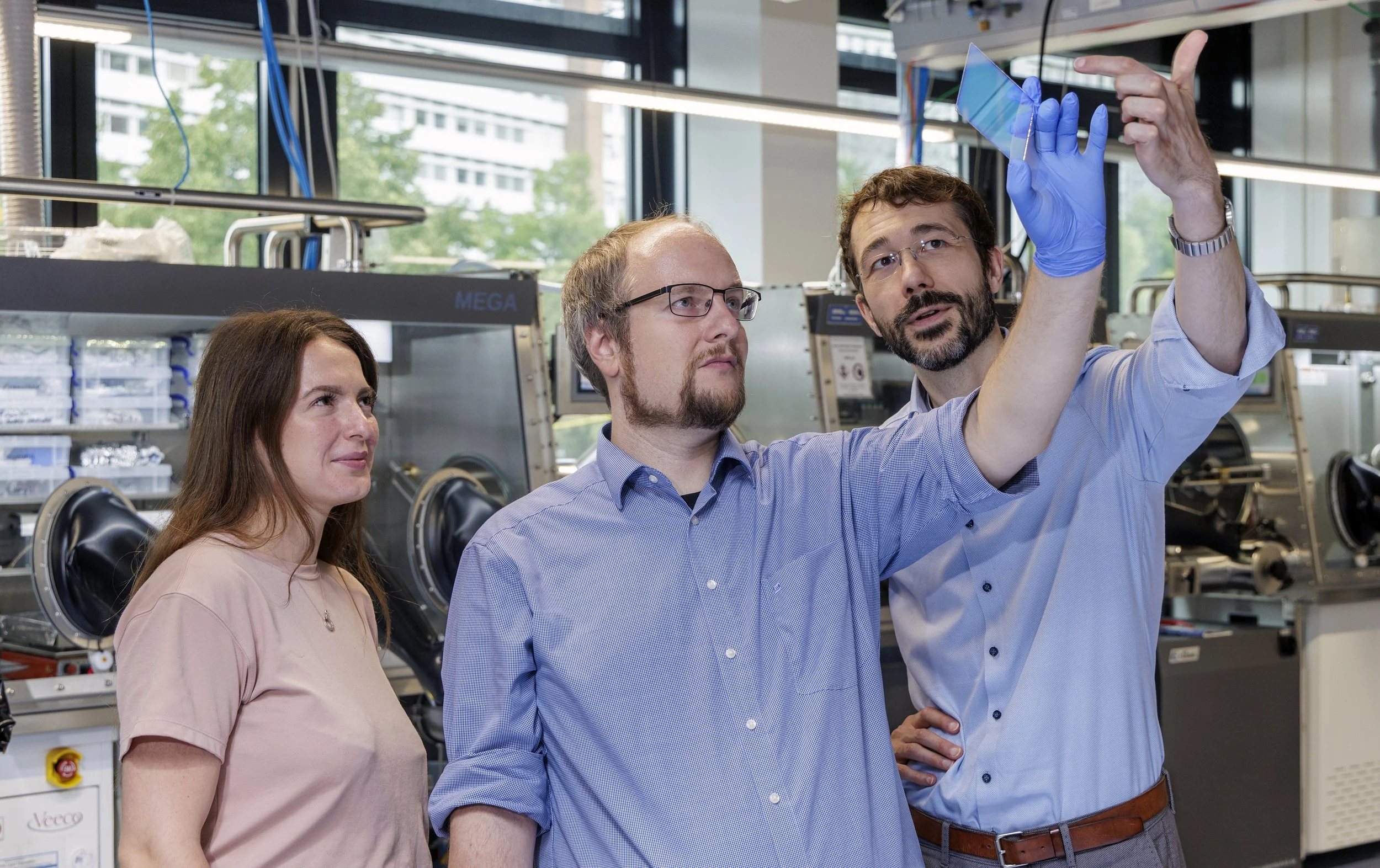
Our Mission
Our mission is to become the preferred technology partner for companies building tomorrow’s optical systems.
We collaborate with research partners and industry experts to tackle complex challenges and bring breakthrough innovations from the lab to future applications.
Contact us now to explore how our filters can elevate your system’s performance.
Meet the Team




-
Co-Founder & Technical Lead
Andreas holds a Ph.D. in Physics (2012) and brings over a decade of expertise in optical materials and quantum optics. As the co-inventor of our proprietary filter technology, developed together with Malte during their research, he leads the technical vision. He ensures our solutions meet the highest scientific and engineering standards, from concept to application.
-
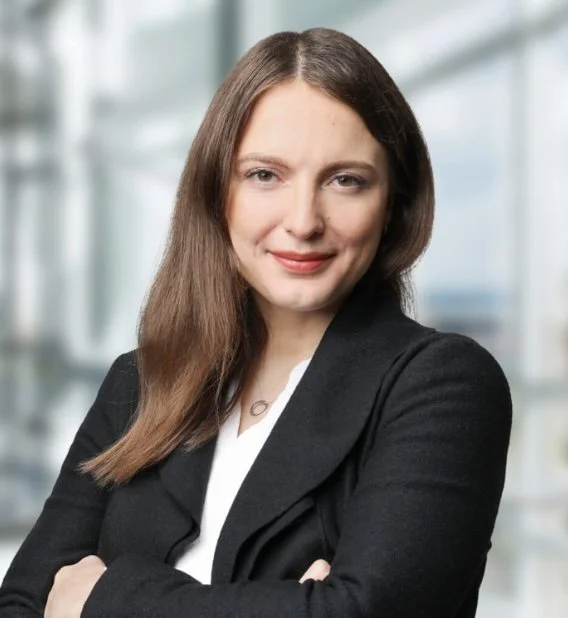
Co-Founder & Business Lead
Elena holds two Master’s degrees in International Management (CEMS) with a focus on Strategy and Finance. Since joining the team in November 2024, Elena has been driving the company’s go-to-market strategy, fundraising, and strategic partnerships, turning pioneering research into impactful solutions for industry and science.
-
Co-Founder & Materials Lead
Emma holds a PhD in Chemistry and brings over 13 years of research experience in organic electronics and photonics. She’s an expert in optical material evaluation and selection for performance-critical applications, and will lead our material development and production quality.
-
Co-Founder & Production Lead
Ahmed holds a PhD in Photonics and has over 7 years of experience in thin-film optics and photonic devices. He combines technical precision with hands-on experience in lab setup, process optimization, and production scaling.
-
Co-Founder & Network Lead
Malte is a Humboldt Professor and one of the leading scientists in his field, with over 20 years of research experience in material science and optical technologies. As co-inventor of our groundbreaking optical filter technology, he combines deep scientific expertise with advanced fabrication know-how to push the boundaries of what is possible in imaging systems.
News & Publications
-
![]()
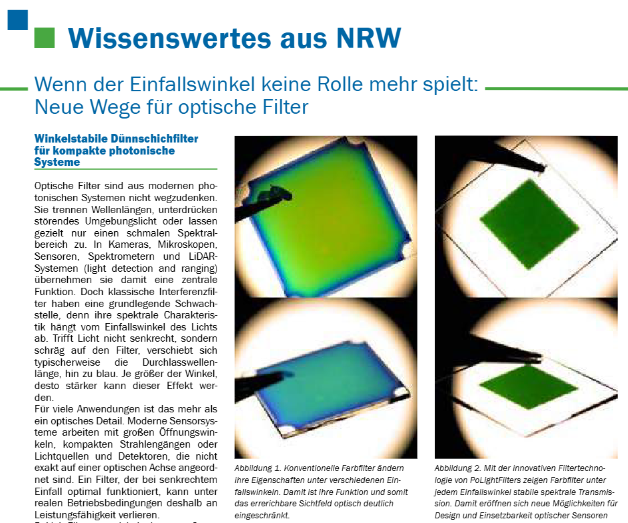
Article: Feature on PoLightFilters in the industry magazine “Werkstoffe in der Fertigung”
09.2026
PoLightFilters was featured in the 05/2026 issue of the “Werkstoffe in der Fertigung” magazine of the HW-Verlag. In the News from NRW section, PoLightFilters introduces its angle-stable filters as a new playground for imaging, sensing and ranging applications.
-
![Man in suit standing in front of a poster with German text that reads 'Research works... for new optical applications,' featuring silhouettes of architectural landmarks and bridges.]()
“Research Makes a Difference - Knowledge Transfer at the University of Cologne”
05.2026
In this interview, Prof. Malte Gather, shares how breakthrough research in nanobiophotonics led to the development of our angle-stable polariton filters. He explains the journey from fundamental photonics research to real-world applications in medical diagnostics, and fluorescence imaging.
-
![A man wearing glasses, a navy sweater, and a collared shirt, holding a laboratory slide with an orange liquid or substance, standing in front of a dark, textured stone background.]()
Article: Lab-on-a-Chip Innovation: Compact Polariton Filter for Next-Gen Imaging
07.2025
Dr. Andreas Mischok shares how our novel filters enable "lab-on-a-chip" imaging using a standard smartphone camera sensor, offering cost-effective, angle-independent fluorescence imaging. They discuss the journey from research to prototyping and their vision to revolutionize diagnostics in labs and medical settings.
-
![Close-up of a green laser beam passing through a transparent optical component, held by black tweezers. Optical Filter]()
Interview: Angle-independent interference filters by PoLightFilters in thin-film optics
04.2025
In this interview with the LP.Pro Magazine, our co-founders Prof. Dr. Malte Gather and Dr. Andreas Mischok explain how they overcame the fundamental angle-dependency challenge in thin-film interference filters. They share insights into the technology’s unique advantages and its potential applications.
-
![Three men in a laboratory, one holding a yellow and transparent test device, all looking at it. Behind them are lab equipment and workstations.]()
Press Release: Federal Ministry supports start-up project on pioneering filter technology
25.04.2025
Novel spectral filters will enable future sensors to work more accurately and reliably. EXIST-FT funding from the Federal Ministry for Economic Affairs and Climate Action promotes outstanding, research-based start-up projects. A research team from the University of Cologne has secured 1.1 million euros.
-
![]()
Interview: Breaking Angular Limitations: Polariton Filters for Optical Systems
06.03.2025
In this interview, Prof. Dr. Malte Gather and Dr. Andreas Mischok explain how they leveraged the principle of strong light-matter coupling to overcome angle dependency in thin-film optics using innovative polariton filters. They discuss the development’s potential to revolutionize imaging, sensing, and display technologies.
-
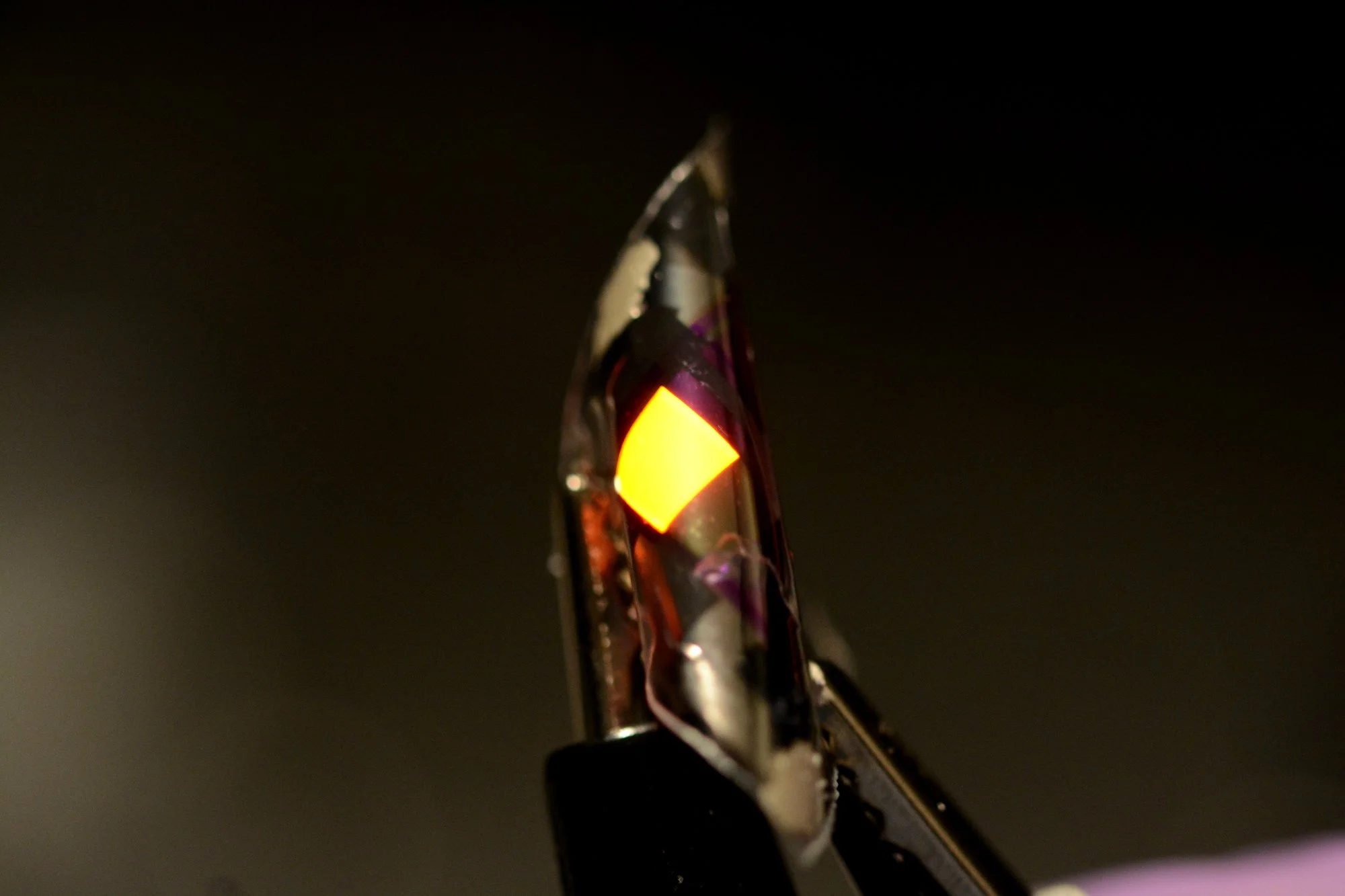
![Close-up of a futuristic, metallic object with a glowing yellow-orange diamond-shaped light, set against a dark background. Optical Filter]()
Paper: Frontline Technology- Polaritons Enable Brilliant Colors in OLED Displays
2025
In this paper, Dr. Andreas Mischok demonstrates how polariton formation enables OLED devices to emit light with consistent brightness and color across angles, a breakthrough overcoming the angular limitations of conventional OLED displays. This paves the way for angle-independent, highly efficient OLED screens.
-
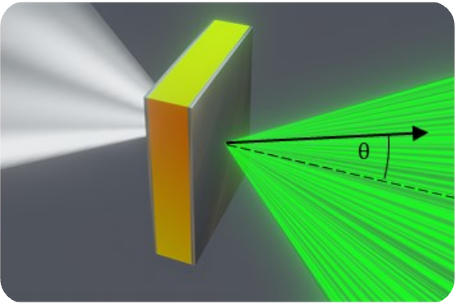
![Diagram illustrating a laser beam passing through a rectangular transparent material, with green laser rays shown bending at an angle, indicating refraction, and a label for the angle of refraction.]()
Press Release: Breakthrough in Quantum Optics: Ultra-Stable Polariton Filters
09.12.2024
Our team, a joint research team from the University of Cologne, has developed ultra-stable thin-film polariton filters, overcoming the long-standing problem of angular dependence in optical systems. Published in Nature Communications, this work opens new possibilities in imaging, sensing, and display technologies.
-
![Four images of a square optical device with different color responses, viewed from different angles, with a black probe interacting with the device.]()
Paper: Breaking the angular dispersion limit by ultra-strong light-matter coupling
03.12.2024
In this paper, Dr. Andreas Mischok and Prof. Dr. Malte Gather unveil how ultra-strong light–matter coupling in microcavities enables optical filters that remain spectrally stable even at extreme angles. The study demonstrates up to 98 % peak transmission and outlines applications across flexible optics.
-
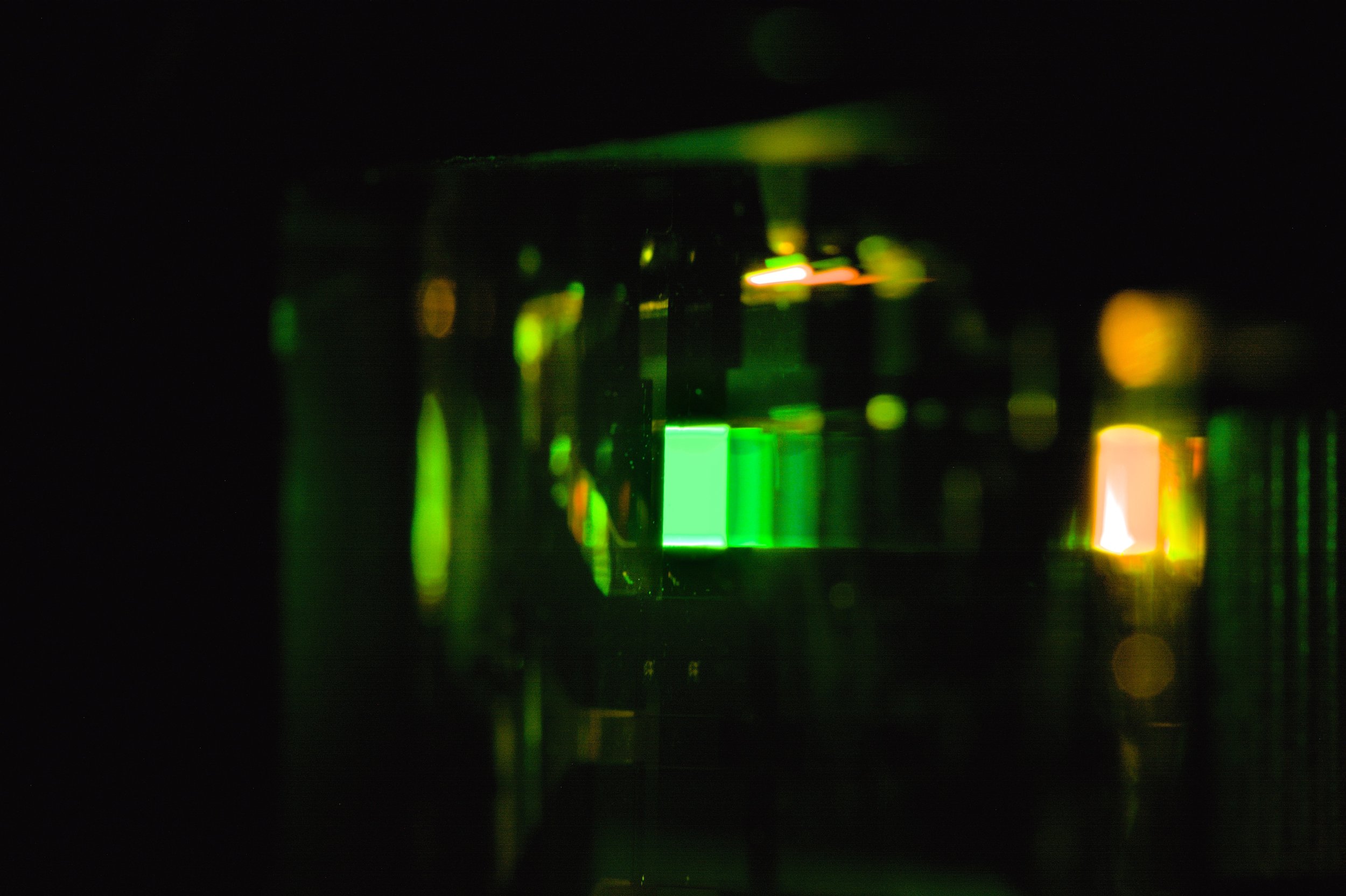
![Close-up of an electronic circuit board with green and orange LED lights, captured in a dark environment.]()
Malte Gather receives ‘Proof of Concept’ grant from the European Research Council
07.11.2024
The University of Cologne’s Humboldt Centre for Nano- and Biophotonics has received a €150,000 Proof of Concept grant, a project to commercialize novel thin-film spectral filters with unmatched angular stability. The technology is being developed many optical applications, enabling high performance over wide incidence angles.
-
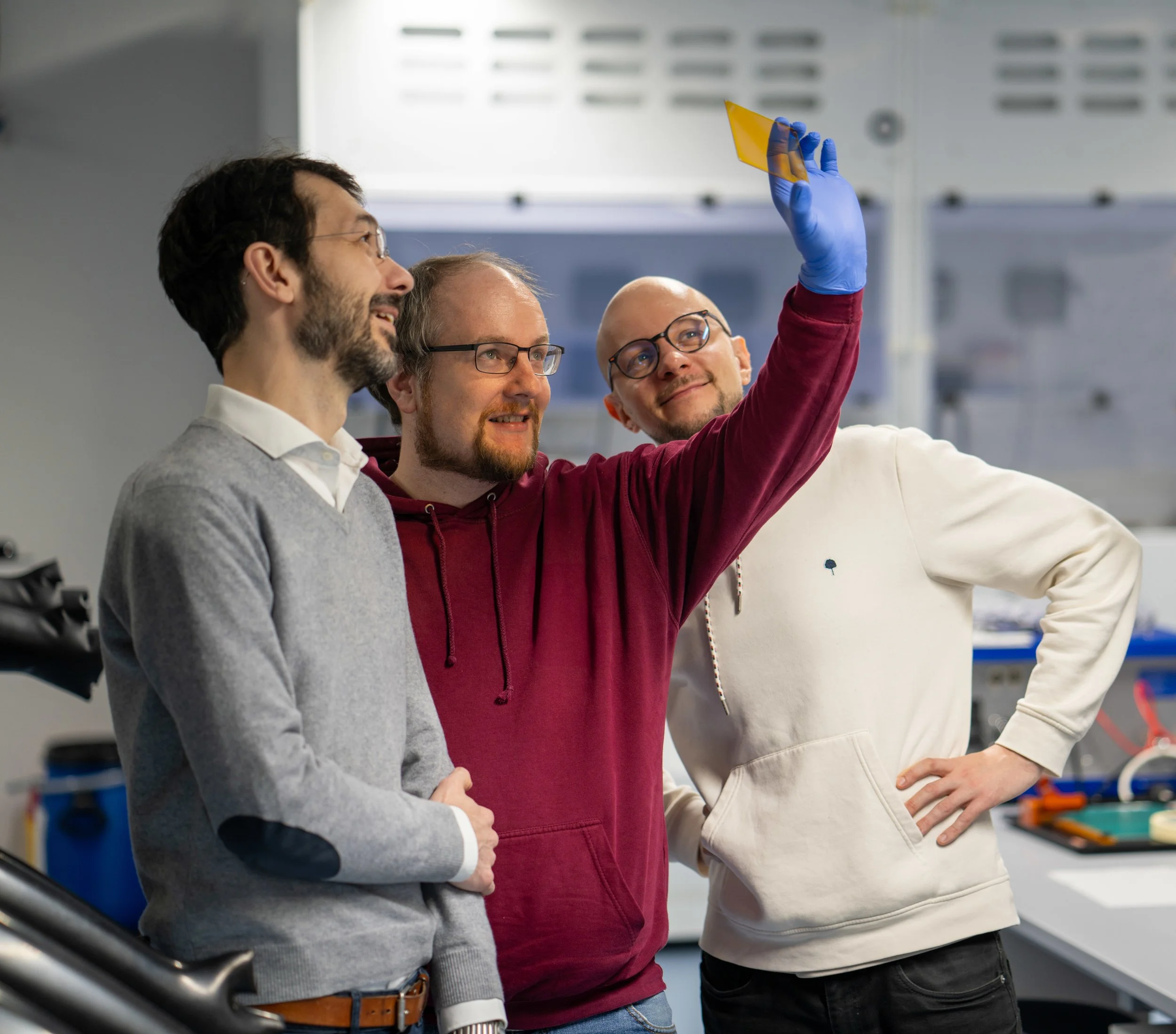
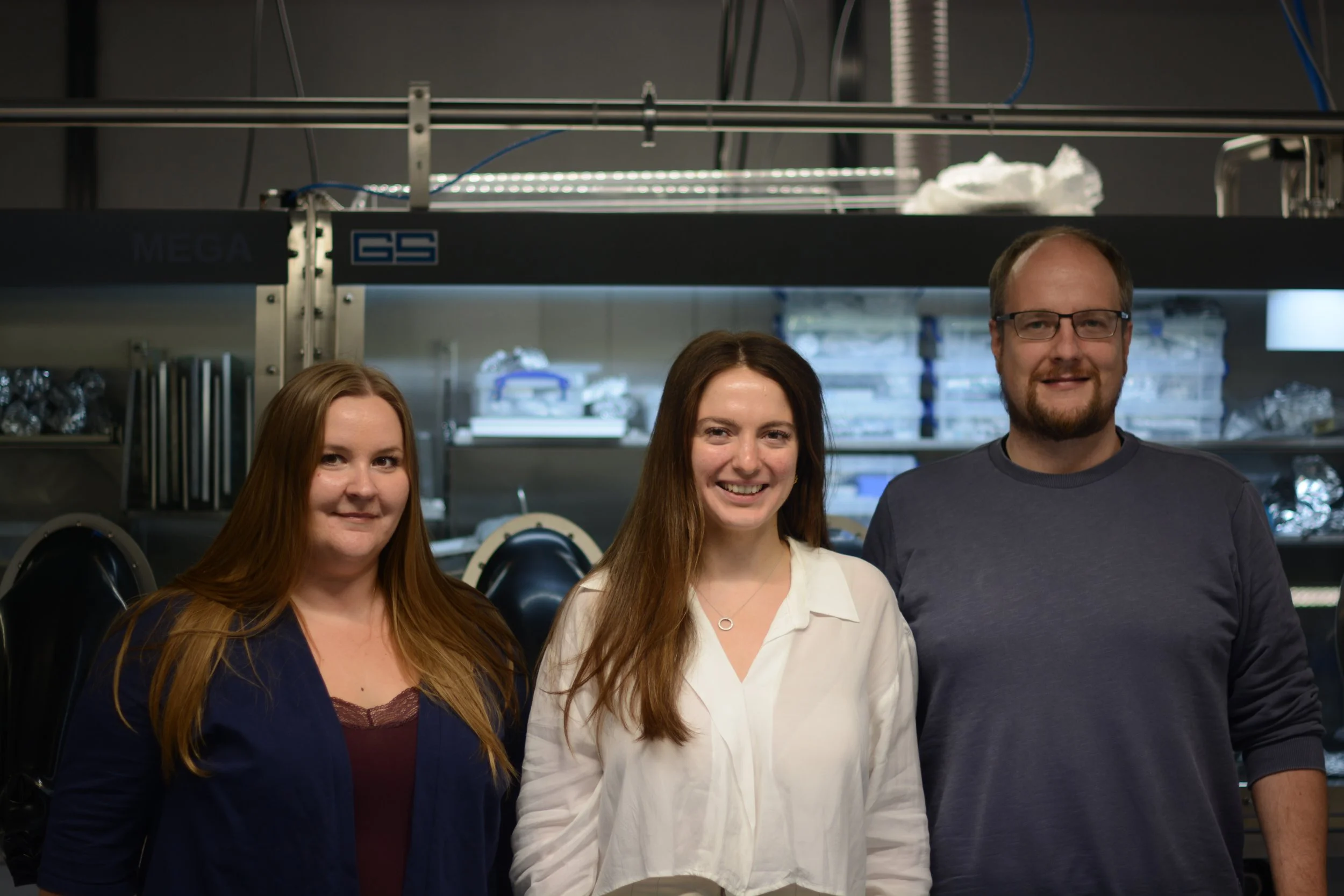
![Three people standing inside a laboratory, smiling at the camera.]()
Interview: From Lab to Industry Market- “Overall, the support is extremely helpful.”
04.08.2025
In this interview, our co-founder, Dr. Andreas Mischok, shares how breakthrough research in quantum optics led to the development of our angle-stable filters, from lab to market. He discusses the journey from lab discovery to building a deep-tech startup ready to tackle real-world optical challenges and obstacles.

Awards
-
![]()
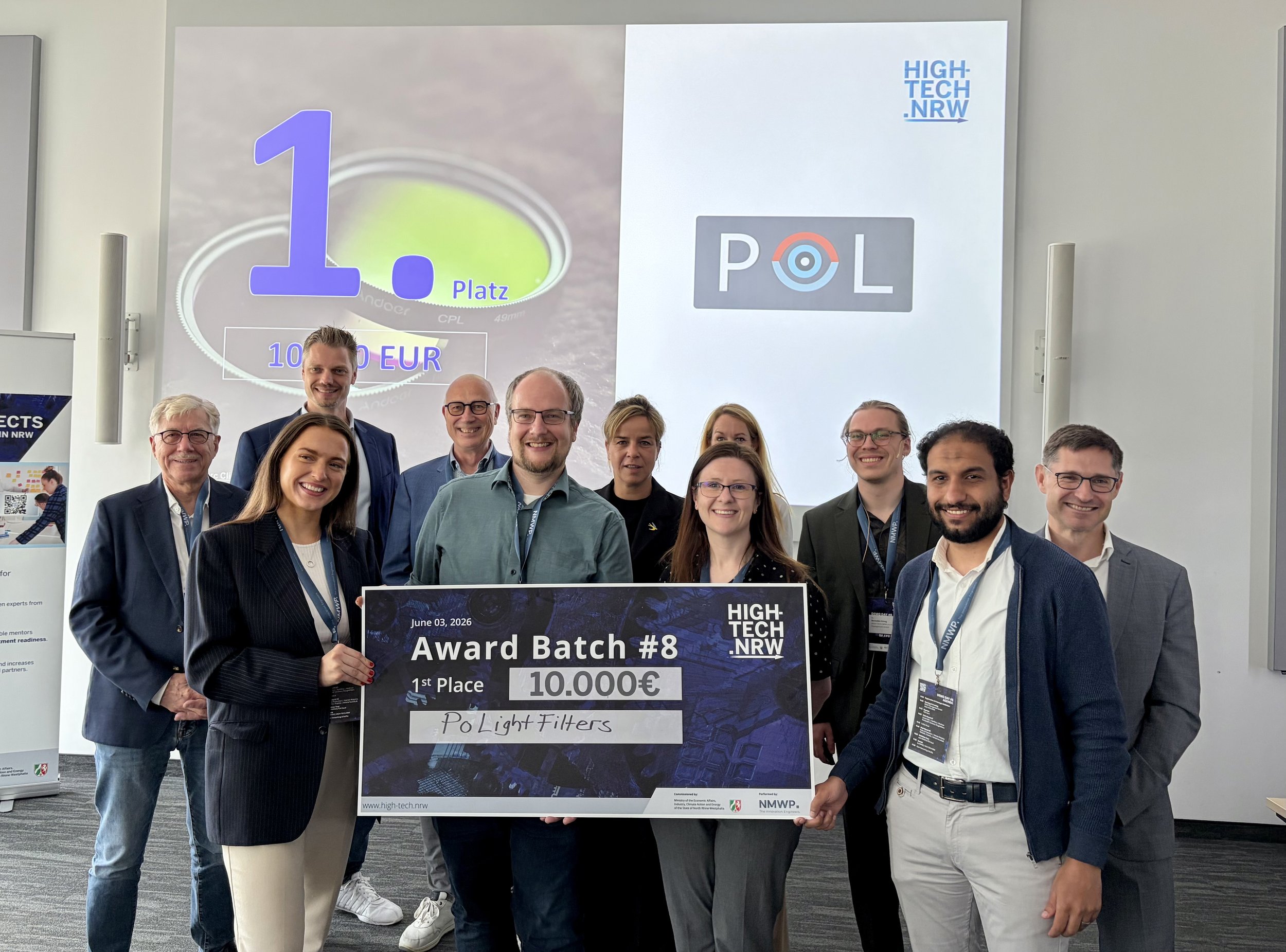
1st Place at the HIGH-TECH.NRW Demo Day 2026
We were selected as the top startup among ten leading DeepTech teams from NRW.
-
![]()
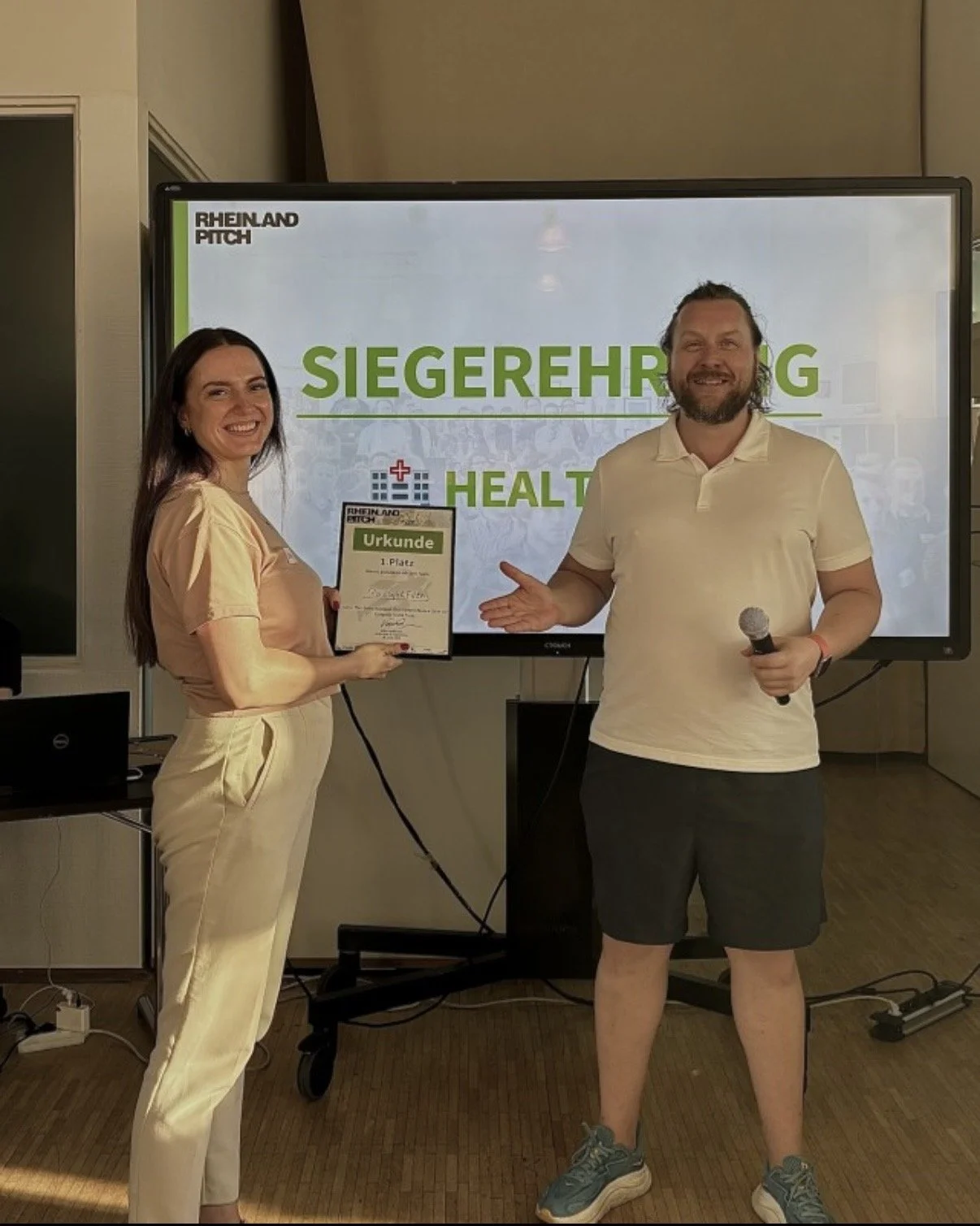
Rheinland Pitch #128 summer special
PoLightFilters was awarded 1st place in the Health Tech category and received the highest overall score across all categories.
-
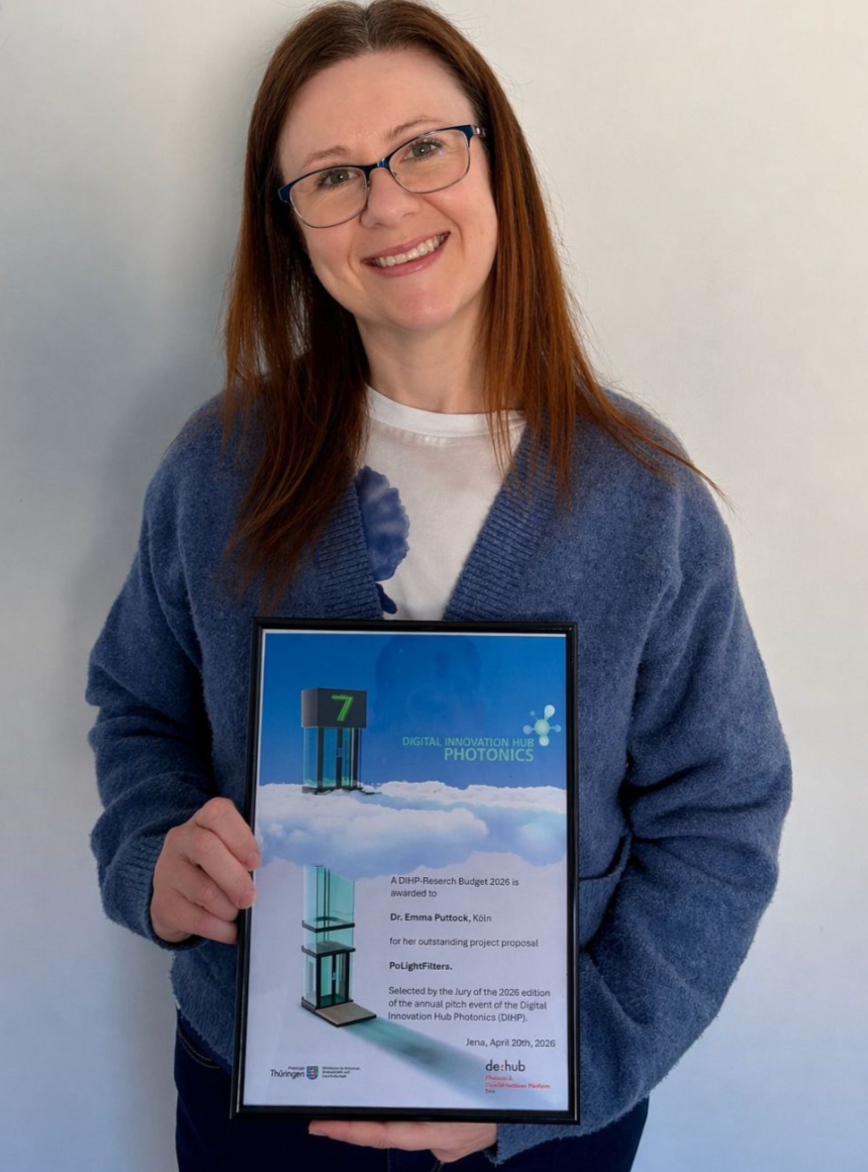
![]()
Digital Innovation Hub Photonics (DIHP)
We were awarded a research budget to explore space qualification for our angle-stable optical filters.
-
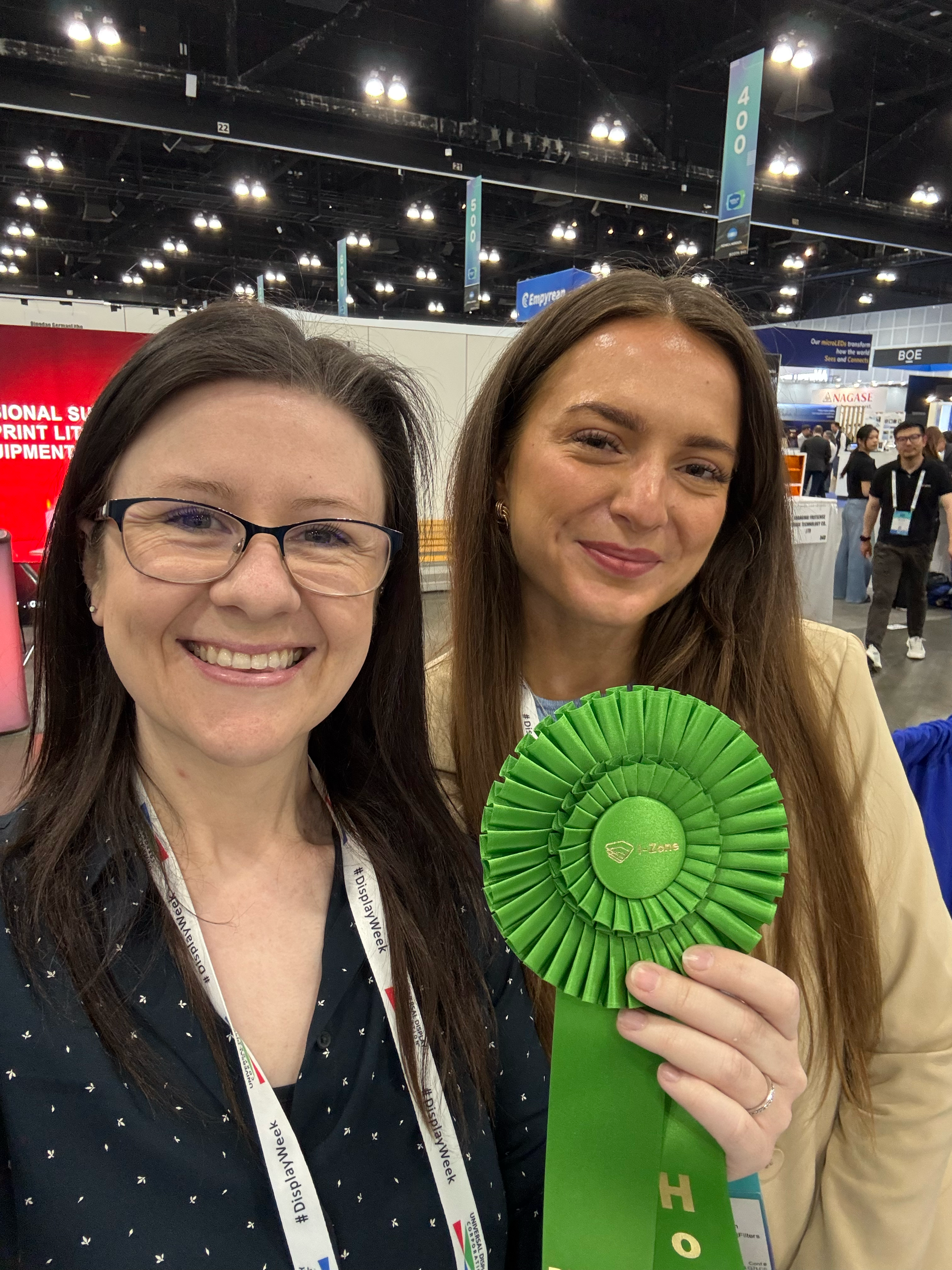
![]()
I-Zone at SID Display-week
At the I-Zone we won an honorable mention award for our angle-stable optical filters.
-
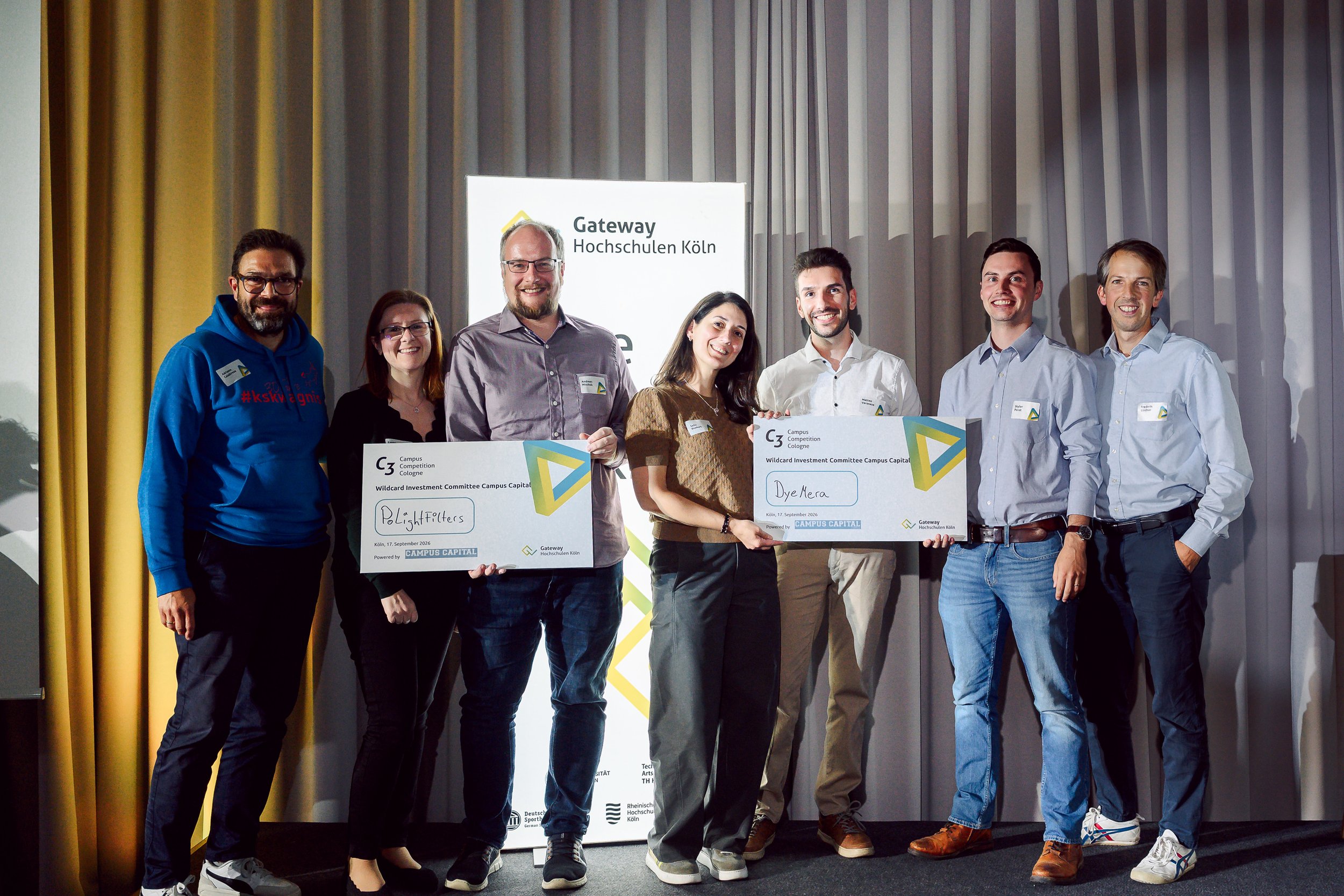
![]()
C3: Campus Competition Cologne Double Award
We received two awards in the categories Accelerator and Investment for our pitch at the C3 finals at the Gateway - Excellence Startup Centre. Image Credit: Dustin Preick
Meet Us
Upcoming Events
EOSAM 2026 – European Optical Society Annual Meeting
📍 Tampere, Finland | 25 August 2026
Join our presentation at the Industrial Mastering of Optical Technologies and Systems session, where Dr. Andreas Mischok will present:
"Angle-Independent Thin-Film Optical Coatings via Ultra-Strong Light-Matter Coupling"
The talk will explore how ultra-strong light–matter coupling enables a new generation of angle-independent optical coatings for advanced optical systems.
SimOEP 2026 – Simulation of Optics and Electronics in Photonics
📍 Winterthur, Switzerland | 9 September 2026
Dr. Andreas Mischok will represent PoLightFilters at SimOEP 2026 to connect with the photonics community, exchange ideas with leading researchers and industry experts, and explore future collaboration opportunities.
VISION 2026
📍 Stuttgart, Germany | 6–8 October 2026
Meet the PoLightFilters team at VISION 2026, the world's leading trade fair for machine vision. We look forward to discussing applications of our angle-independent optical filter technology in imaging, sensing, and industrial vision.
FAQ: Angle-Stable Optical Filters
-
In a standard thin-film interference filter, the effective optical thickness relevant to the interference condition decreases as the angle of incidence increases. This shifts the passband toward shorter wavelengths (a "blue-shift"), which narrows the usable field of view and degrades signal quality in off-axis light. Our filters are based on strong light–matter coupling (polariton filters), which decouples the spectral response from this geometric path-length dependence, so the passband stays in place across wide incidence angles.
-
Our filters use ultra-strong light–matter coupling in organic microcavities, forming polariton states that define the filter's spectral response. Because the polaritonic response is partially pinned by the molecular resonance, enabling exceptional spectral stability even at large incidence angles. The underlying principle was published in Nature Communications (2024).
-
Our filters maintain consistent performance regardless of the incidence angle, eliminating the angle-dependency that often limits image quality in precision systems.
-
Our filters maintain a stable passband up to ±80° angle of incidence, compared to conventional interference filters, which typically shift by several nanometers within the first 10–15°.
-
Our filters have demonstrated up to 98 % peak transmission while maintaining spectral stability across wide incidence angles, combining high throughput with angle independence.
-
Yes. We offer fully custom-engineered solutions tailored to your specific wavelength range, blocking requirements, and mechanical constraints.
-
We design custom filters across the 400–1000 nm range, covering visible and near-infrared applications. Specific center wavelengths and bandwidths are tailored to your system.
-
Currently, our focus is on custom-engineered solutions. A catalog of standard products is planned for the future.
-
Any optical system that collects light over a wide range of angles. Primary use cases include LiDAR (wider field of view and reliable performance under varied lighting), fluorescence imaging and diagnostics (sharper, more accurate imaging), and sensing. The filters are also relevant to display technologies such as OLEDs.
-
We have proven manufacturability through advanced fabrication, and are preparing for pilot projects with early partners.
-
Contact us to discuss your application. We can assess feasibility, define specifications, and outline a project plan to integrate our filters into your system.
Contact us
Interested in working with us? Please fill out the form, and our team will get back to you shortly. We’re looking forward to exploring how our technology can support your needs.
Connect with us:
Click the Button & follow us on LinkedIn